


Three roll mill price: what factors affect equipment costs and value
A three roll mill price and its equipment value depend on a few clear factors. Buyers can evaluate each factor before they commit to a purchase.
Technical specifications, application fit, regulatory compliance, and cost considerations form the main factor groups. Each group carries its own weight in the final quotation and in the mill's long-term performance.
The central question is practical. How should a buyer weigh these factors to make an informed, cost-effective purchase and a sound judgment about long-term value? Careful comparison across all four groups gives the clearest answer.
Key Takeaways
Roll size and material are the biggest price factors. Choose the right size and material for your job to get good value.
Match the mill to your material and production scale. The right fit ensures efficient performance and avoids extra costs.
Safety and certification cost more upfront. They prevent expensive shutdowns and protect your long-term investment.
The purchase price is only part of the total cost. Energy, maintenance, and downtime make up most of the lifecycle cost.
The lowest price rarely means the best value. Balance upfront cost with long-term performance to get the strongest return.
Three Roll Mill Technical Specifications
Roll Size and Material
Roll diameter drives cost more than brand name or automation level. Buyers should treat roll diameter as the first cost anchor in any quotation.
Roller size, roller material, and automation level form the three key price factors. High-quality raw materials raise the purchase price. They also improve durability and efficiency across the working life of the machine. Manufacturing cost drivers include roll diameter and weight, groove profile complexity, and dimensional tolerance requirements. A wider roll carries more mass, demands heavier bearings, and requires tighter machining. Each step adds cost.
Roller material choice carries a distinct cost profile:
Alloy steel rollers: the most inexpensive option, widely used for paint, ink, and glue applications.
SiC rollers: available at a small additional cost over steel, with improved wear resistance.
Zirconia ceramic rollers: the most expensive option, chosen when zero metal contamination is required in cosmetics, pharmaceuticals, food, or electronics.
Cost offset: ceramic rollers cost more upfront, yet reduced contamination testing and certification costs can lower overall quality-compliance expense.
Zili's three roll mill design illustrates how these specifications combine. The rolls run at a 1:3:9 speed ratio and achieve 1–5μm fineness. Standard rollers use centrifugally cast dual-metal alloy at HS 70–75 hardness. Buyers can specify zirconia or alumina ceramic rollers for metal-free processing. A full-length internal water circulation system handles cooling, and gap adjustment works through hydraulic or mechanical systems.
Drive Power and Controls
Drive power and control architecture follow the roll size decision. A larger roll needs more torque to maintain the speed ratio under load. Motor sizing, gearbox rating, and control responsiveness all scale with the roll diameter and the material viscosity. These elements add cost, yet they protect output consistency.
Automation level shapes both price and operator workload. Manual gap adjustment costs less upfront. Hydraulic adjustment adds cost and delivers faster, repeatable gap changes between batches. Buyers should match the control choice to batch frequency and tolerance needs. A high-mix production line gains more from hydraulic control than a single-product lab does.
Cooling capacity belongs in the same specification review. Heat-sensitive materials demand stable roll temperature. The internal water circulation design keeps the working surface cool along the full roll length. This feature supports consistent fineness and protects material quality.
Buyers who compare quotations on roll diameter, roller material, drive rating, and control type gain a clear view of what each price includes. That comparison turns a list of numbers into a defensible specification decision.
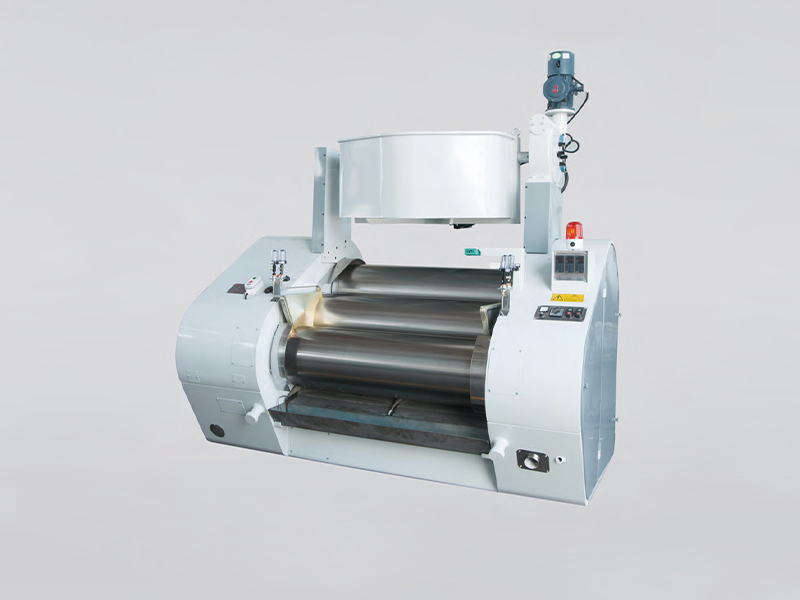
SY Series Hydraulic Three Roll Mill For Paint
Three roll mill for paint is core grinding equipment for high-viscosity paint production. Three differential-speed rollers create strong shear force to crush pigment agglomerates, evenly disperse raw materials and refine paint particles. Its adjustable roller gaps guarantee stable fineness for glossy, uniform finished paint.
View Product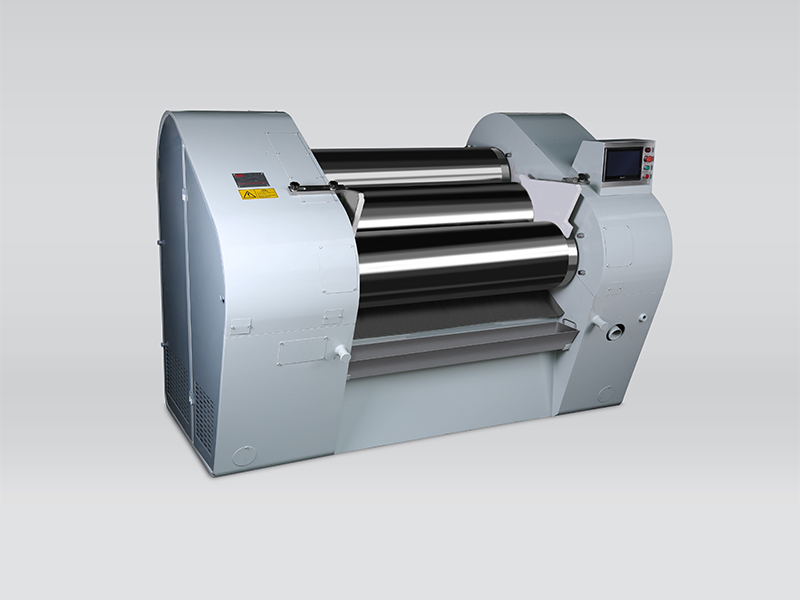
SY Series Hydraulic Digital Three Roll Mill
The hydraulic three roll mill adopts hydraulic automatic pressure control to adjust roller gaps precisely, delivering stable shear force for grinding and dispersing high-viscosity pastes like inks, paints, cosmetic ointments and electronic conductive pastes. Its three counter-rotating rollers run at different speeds to crush agglomerates and refine particles evenly.
View Product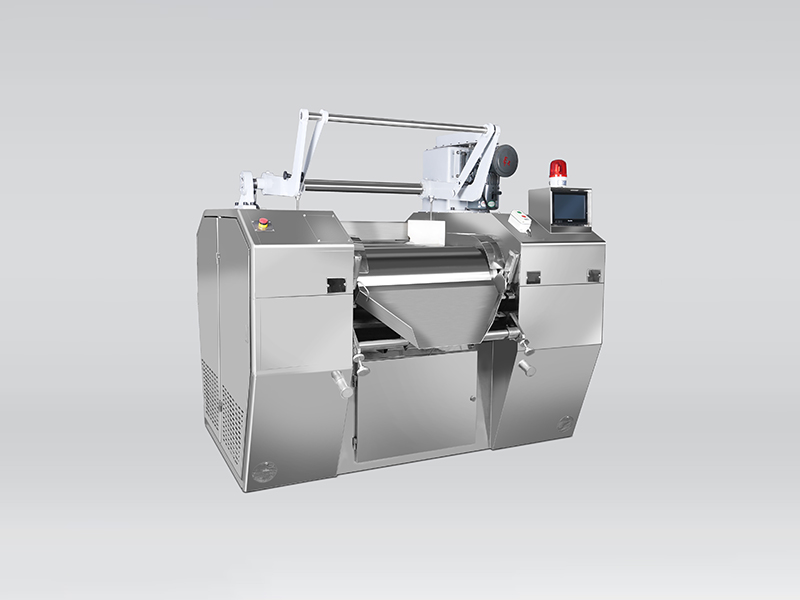
SY Series PLC Flat Hydraulic Three Roll Mill
PLC flat hydraulic three roll mill is an upgraded automated grinding device built on the traditional three roll mill machine. It adopts flat horizontal roller layout and full hydraulic pressure regulation, with a PLC touchscreen to precisely control roller gaps, rotating speed and pressure.
View ProductApplication Fit and Performance
Material behavior and production scale decide which configuration suits a given job. Both shape the quotation as much as the hardware does.
Industry and Material Properties
Viscosity sets the first boundary. This guide matches the material to a configuration:
Viscosity Range (mPa·s) | Required Configuration |
|---|---|
< 50,000 | May need gap mode; verify machine supports it |
50,000–500,000 | Standard pressure mode; most versatile range |
500,000–2,000,000 | Heavy-duty drive and reinforced frame required |
A three roll mill handles pastes up to 2,000,000 mPa·s, far above bead mills (30,000) and ball mills (50,000). Low-viscosity electronic materials can run in gap mode at line forces as low as 3–4 N/mm.
Heat sensitivity demands cooling. Coolant circulation through cored rolls is essential for UV-curable coatings, heat-sensitive binder systems, and extended production runs. Without cooling, shear-generated heat alters viscosity and can degrade the material. The open-roll design's high surface contact area provides superior heat dissipation versus enclosed chamber mills.
For cosmetic and pharmaceutical applications requiring zero metal contamination, specify zirconium dioxide ceramic rolls with surface roughness Ra ≤ 0.2 μm (ISO 12085), verified by ICP-MS on installation. Alloy steel rolls—even heavily chrome-plated—can transfer trace elements to the product. Choosing steel rolls to cut equipment cost risks batch contamination during regulatory testing, and retesting/reformulating costs far exceed the investment in ceramic rollers.
Throughput and Output Quality
Roller diameter (from ~50 mm lab units to 400+ mm production units) directly determines throughput capacity and equipment cost. A larger diameter means a longer nip contact zone and more material processed per revolution, which raises the price. High-viscosity pastes requiring servo-driven, hydraulically controlled mills with digital recipe memory represent the highest-investment configuration.
Zili's model families fit different scales. Lab-scale SD/SDS units serve formulation work. Hydraulic production SYS/SYP series handle continuous output. Manual S/SG series suit smaller batches. These mills serve inks, electronic pastes, cosmetics, and pharmaceuticals. Buyers select a configuration based on material, required fineness, production volume, and tolerance needs. Each choice influences cost and value.
Regulatory Compliance and Safety
Safety and Environmental Standards
Three buyer risks matter most in this category. The first is compliance failure, where a mill cannot meet the safety or environmental rules of the target market. The second is production interruption, where a safety stop or failed audit halts output. The third is hidden lifecycle cost, where unplanned upgrades and remediation erode the original savings.
A mill that fails a safety audit costs far more than the price gap between a compliant unit and a non-compliant one.
Safety standards touch several machine areas. Guarding around the nip zone protects operators from the rotating rolls. Emergency stop circuits must respond reliably under load. Electrical enclosures need ratings that match the production environment. Environmental standards govern solvent vapor handling, dust control, and waste from cleaning. A mill built for these requirements carries a higher upfront price. It also avoids the shutdowns and retrofit costs that follow a failed inspection.
Certification and Documentation
Certifications and documentation add upfront cost to every quotation. They also protect uptime and long-term value. A certified mill arrives with test records, material certificates, and conformity documents. These records shorten installation approval and reduce the risk of a rejected shipment at customs.
Documentation supports maintenance planning as well. Roller material certificates confirm the alloy grade and hardness. Calibration records for gap adjustment give maintenance teams a baseline. Buyers should request the full document package before signing. A complete package signals a supplier that controls its production process. That control translates into fewer surprises after commissioning.
Three Roll Mill Cost and Value
Initial vs. Operating Costs
The purchase price tells only part of the story. Across industrial equipment, the sticker price typically accounts for just 25–40% of total lifecycle cost. The remaining 60–75% accumulates quietly through energy, maintenance, downtime, and disposal. Buyers who compare quotations on price alone miss the larger number that governs real return.
Hidden Lifecycle Cost Category | Typical Share of Total Cost of Ownership | What It Covers |
|---|---|---|
Energy consumption | Varies by asset (heavy for continuously running mills) | Power drawn over the equipment's full operating life |
Maintenance (incl. spare parts) | 30–45% | Preventive labor, spare parts, consumables, corrective repairs |
Downtime | Up to 40–60% for critical assets | Lost production revenue during unplanned outages |
Disposal / decommissioning | $50K–$200K | Removal, decommissioning, and environmental compliance at end of life |
A three roll mill draws continuous power during production, so energy carries real weight in its cost profile. Downtime weighs heaviest when the mill sits on a process-critical line with no backup unit. Maintenance covers bearings, seals, hoses, rolls, and hydraulic components. Repeated part replacement signals a root cause worth investigating rather than a parts budget worth expanding.
Several cost drivers hide inside daily operation. Compressed-air leakage, hydraulic power losses, and unnecessary running of auxiliaries drain energy without appearing on any invoice. Wrong grease, over-greasing, or contamination quietly raises bearing and gearbox costs. Small hydraulic oil leaks compound into oil consumption, component damage, downtime, and safety risk. A disciplined maintenance plan adjusts calendar-based service by failure history, running hours, condition, and criticality. Standardizing interchangeable components and negotiating on total lifecycle cost rather than purchase price further protects the budget.
Lifespan and Resale Value
Depreciation and resale depend on four factors. Age and operating hours set the baseline. Physical condition and maintenance history separate a well-kept unit from a neglected one of the same vintage. Brand reputation shapes buyer confidence in the used market. Market demand for the specific configuration decides how quickly a seller finds a buyer and at what price.
Looking For Reliable Three Roll Mill & Bead Mill Manufacturer?
ZEELINAL (Changzhou Zili Intelligent Equipment) is a national high-tech enterprise specializing in full-range wet grinding & dispersion equipment. We develop precision grinding machines with stable sub-micron fineness, supporting seamless scale-up from lab to mass production, widely used in new energy slurry, electronic materials, coatings, inks and adhesives, with professional OEM & ODM support available.
Raw material and steel price fluctuations feed into overall equipment cost. Rollers, frames, and hydraulic components all carry metal content, so commodity movements reach the quotation. Buyers should read price validity periods with this in mind.
The sound approach balances upfront price against long-term value. A lower-cost manual configuration suits low-volume, single-product work well. A hydraulic production unit costs more and earns that difference back through faster changeovers and steadier output on high-mix lines. Neither choice is wrong. Each fits a different production reality, and the right match delivers the strongest return over the equipment's working life.
Technical specifications, application fit, regulatory compliance, and full lifecycle cost together shape what a three roll mill is truly worth. Each factor carries measurable weight in the quotation and in the years that follow.
The lowest price rarely delivers the best value. Buyers who balance roll size, material properties, safety documentation, and total cost of ownership gain the strongest long-term return. The right equipment matches the buyer's specific production needs, whether that means a compact lab unit or a hydraulic line built for continuous output.
FAQ
What drives the price of a three roll mill the most?
Roll diameter outweighs brand and automation level as a cost driver. Roller material, drive power, and control type then adjust the quotation up or down.
How does a buyer choose between a lab mill and a production mill?
Production volume and batch frequency settle the choice. Zili's SD/SDS series serves formulation work, the hydraulic SYS/SYP series handles continuous output, and the manual S/SG series suits smaller batches. Material viscosity, required fineness, and tolerance needs refine the selection further.
When do ceramic rollers justify their higher price?
Ceramic rollers earn their cost when metal contamination is unacceptable. Cosmetics, pharmaceuticals, food, and electronics fall into this group. Zirconia or alumina rolls support metal-free processing, and the reduced testing and certification burden can offset the higher purchase price over time.
Should a buyer compare quotations on purchase price alone?
No. The sticker price typically covers just 25–40% of total lifecycle cost. Energy, maintenance, downtime, and disposal make up the rest. A quotation comparison that includes these categories reveals the true cost of each configuration.
Does a higher price always mean better value?
Not automatically. A manual configuration fits low-volume, single-product work well, while a hydraulic unit earns its premium on high-mix lines through faster changeovers. Value comes from matching the specification to the actual production reality, not from the price tag itself.


