


You use a three roll mill to mix, refine, and disperse materials with high viscosity. This machine works well in industries such as inks, cosmetics, and pharmaceuticals because it creates strong shear forces between its rollers. You can process thick pastes and achieve uniform particle size, which is important for quality and performance.
Key Takeaways
Three roll mills mix and refine high-viscosity materials, ensuring uniform particle size and smooth texture.
The unique roller arrangement creates strong shear forces, allowing for effective dispersion and particle size reduction.
Adjusting the roller gap gives you control over the final product's texture and quality, crucial for industries like cosmetics and pharmaceuticals.
Three roll mills operate continuously, improving efficiency and reducing energy consumption compared to two roll mills.
These mills minimize contamination risks by not using grinding media, making them ideal for sensitive applications.
How a three roll mill works
Roll arrangement and movement
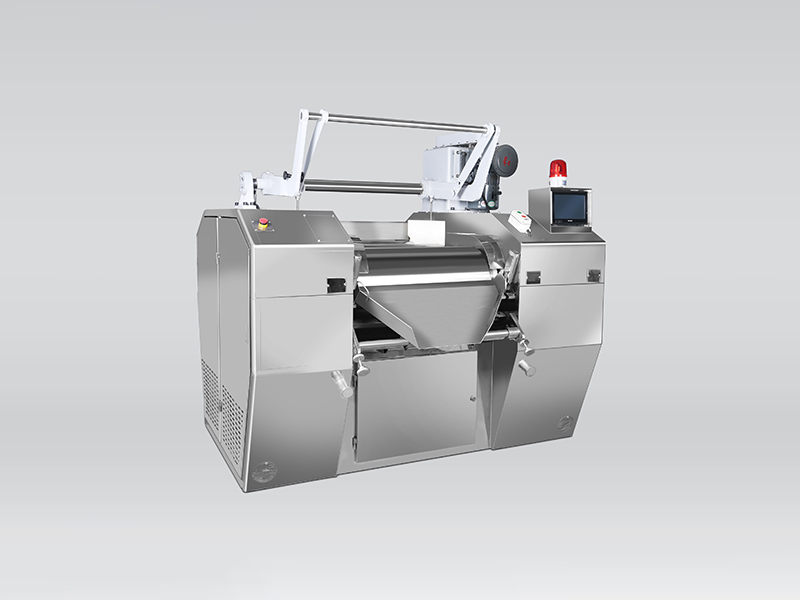
When you look at a three roll mill, you see three rollers placed side by side in a horizontal line. Each roller spins in a different direction and at a different speed. This setup is not random. It is designed to create strong forces that help you mix and break down thick materials.
The three rollers are arranged horizontally and rotate at different speeds.
This arrangement generates high shear forces and friction, which are essential for effective mixing.
Materials are fed between the rollers, allowing for progressive refinement and homogenization.
You feed your material into the gap between the first and second rollers. As the rollers turn, the material moves through each gap, getting squeezed and stretched. This movement helps you achieve a smooth and even blend.
Working principle
The three roll mill works by using the difference in speed between the rollers to create shear force. This force is what breaks down clumps and spreads out particles in your material. You can see how each roller plays a role in the process:
Roller Position | Speed Ratio | Shear Force Impact |
|---|---|---|
Feed | Slowest | Initial material entry and feeding |
Center | Medium | Significant shear dispersion occurs |
Apron | Fastest | Final grinding and dispersing effect |
Shear force is generated by the differential speeds of the rollers. This creates a smearing and tearing action on the material. The shear force is essential for dispersing and homogenizing viscous materials. Effective particle size reduction occurs by breaking down agglomerates.
You will find that the three roll mill is especially good for high-viscosity materials. It can handle pastes and slurries that other machines cannot process well. The design allows you to adjust the gap between the rollers, so you can control how fine the final product becomes. Many industries need this level of control to get a consistent and high-quality result.
Three roll mills are specifically engineered for high-viscosity materials, utilizing controlled shear forces for effective particle size reduction and dispersion. This design allows for precise adjustments to the roller gap, enabling you to achieve a final fineness of 3–18 μm, which is crucial for industries that demand consistent product quality. The triple roll mill excels in handling materials with viscosities over 100,000 cP, significantly outperforming bead mills that struggle beyond 10,000 cP. It also minimizes contamination risks because it does not use grinding media and is more energy-efficient compared to high-pressure homogenizers.
If you use advanced models like Zili's High-Precision Three Roll Mills, you benefit from features such as hydraulic pressure systems and dynamic cooling. Hydraulic systems help you maintain even pressure across the rollers, which leads to uniform particle size and better dispersion. Dynamic cooling protects temperature-sensitive materials, so you do not have to worry about heat damaging your product. These features make the three roll mill a top choice for industries that need precision and reliability.
Tip: When you need to process thick, sticky materials and want a smooth, even result, a three roll mill gives you the control and power you need.
Three roll mill components
The three rolls
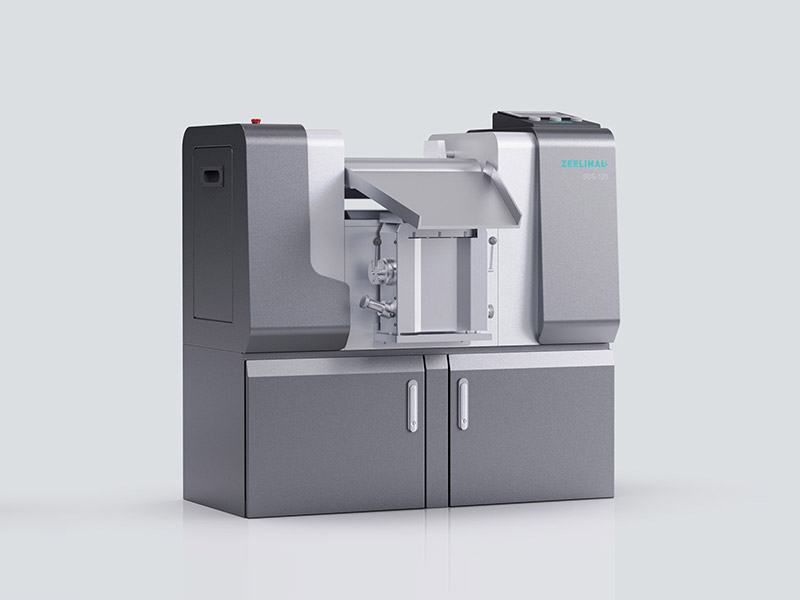
You see three rollers at the heart of every three roll mill. These rolls play a key role in mixing and dispersing materials. The quality of the rolls affects how well your mill performs and how long it lasts. Manufacturers use different materials for the rolls to match your needs:
Hardened steel rolls give you strong wear resistance and consistent results.
Alloy steel works well for most industrial jobs and keeps costs low.
SiC rollers offer extra durability for a small increase in price.
ZrO2 ceramic rolls prevent metal contamination, which is important for sensitive products.
Chilled cast iron, stainless steel, or ceramic coatings help you handle abrasive or corrosive materials.
Ceramic rollers help you keep a steady temperature, especially when you use dynamic cooling systems. This protects sensitive materials in cosmetics and pharmaceuticals. You can achieve very fine particle sizes, even less than 1 micron, which gives your products smooth textures and even colors. Every batch comes out consistent and high-quality.
Feed and discharge systems
You feed your material into the mill through a hopper or feed tray. The rollers pull the material in and start the mixing process. After the material passes through all three rolls, it exits through a discharge system. This system collects the finished product and makes it easy for you to move it to the next step. Some mills use special trays or conveyors to help you handle sticky or thick materials.
Tip: Choose a feed and discharge system that matches your material’s viscosity and production needs.
Adjustment and controls
You control the quality of your product by adjusting the gap between the rolls. Adjustment devices let you set the distance and alignment of each roll. This helps you get the particle size and texture you want. Here is a table showing common adjustment devices and their functions:
Type of Roll Adjustment Device | Key Functions |
|---|---|
Axial Adjustment Devices | Align grooves, support strip shape control, secure axial positioning |
Radial Adjustment Devices | Adjust roll gap, ensure target dimensions, control roll parallelism |
Upper Roll Adjustment Device | Adjust upper roll position for reduction control |
Middle Roll Adjustment Device | Compensate for bearing wear, enable alternating rolling passes |
Lower Roll Adjustment Device | Align lower roll with rolling line |
Vertical Roll Adjustment Device | Control width dimensions in section and bar rolling |
You use these controls to keep your process stable and your results consistent. Modern mills often include digital displays or hydraulic systems to make adjustments easier and more precise.
Three roll mill vs. two roll mill
Key differences
You often see two types of mills in material processing: three roll mills and two roll mills. Each has its own design and purpose. The main difference lies in how they handle efficiency and mixing quality. Three roll mills let you work continuously, which means you spend less time waiting. Two roll mills require the motor to stop and reverse direction. This causes delays and lowers efficiency, especially when you need to process large volumes.
Here is a table that shows how each mill compares:
Mill Type | Efficiency Characteristics | Energy Consumption Characteristics |
|---|---|---|
Three Roll Mills | High throughput, continuous operation, minimizes idle time, designed for high production. | More energy-efficient due to continuous operation without reversals. |
Two Roll Mills | Requires frequent motor reversals, leading to lower efficiency in high-volume applications. | Higher energy consumption due to constant start-stop-reverse cycles. |
You get better mixing quality with a three roll mill. The three rollers create strong shear forces, which break down particles and mix materials more evenly. Two roll mills cannot match this level of dispersion. You also save energy because three roll mills do not need to stop and start as often.
Note: Three roll mills minimize idle time, so you can finish your work faster and use less energy.
Unique features
You choose a three roll mill when you need fine dispersion and high precision. This is important in industries like electronics, pharmaceuticals, and cosmetics. You can process large amounts of material quickly and achieve consistent results. The three roll mill gives you control over particle size and texture, which is crucial for sensitive applications.
Here is a table that shows where three roll mills excel:
Application Area | Benefits of Three Roll Mills |
|---|---|
Electronics | Ideal for producing electronic pastes with high precision. |
Pharmaceuticals | Essential for creating stable ointments with perfect texture. |
Specialty Chemicals | Provides consistent quality for demanding formulations. |
Cosmetic Foundations | Achieves fine dispersion necessary for high-quality products. |
Ceramic Suspensions | Ensures precise control over product geometry. |
You use three roll mills for their speed and precision.
You get consistent quality, which matters for sensitive products.
You achieve fine dispersion, making your materials smooth and uniform.
You see that three roll mills are the top choice for high-precision needs. You can rely on them for quality and efficiency in your production process.
Three roll mill advantages and applications
Main benefits
You gain many advantages when you use a three roll mill in your production process. This machine gives you control over the quality and texture of your materials. You can achieve results that meet strict industry standards. Here are some key benefits:
High precision: You adjust the roller gap to control particle size. This helps you create products with consistent quality.
Uniform particle size: The mill uses strong shear forces to break down clumps and spread out particles evenly. You get smooth and stable materials every time.
Versatility: You process a wide range of materials, from thick pastes to sensitive creams. The mill adapts to different production needs.
Efficient mixing and dispersion: You save time because the mill works continuously. You do not need to stop and reverse the motor.
Reduced contamination risk: The mill does not use grinding media, so you avoid unwanted particles in your product.
Energy efficiency: You use less energy compared to machines that require frequent stops and starts.
Note: You can achieve a final particle size between 3 and 18 micrometers. This level of control is important for industries that demand consistent product quality.
Manufacturers rely on three roll mills to produce batches with uniform dispersion. This is vital for inks and coatings. The mill focuses on dispersion quality, not just the initial particle size. You influence the final fineness directly by adjusting the roller gap. The process is continuous and highly controllable. You see smooth, stable, and high-performance products as a result.
Industry uses
You find three roll mills in many industries. Each industry values the mill for its ability to create uniform and high-quality materials. Here are some common applications:
Industry | Typical Uses | Why It Matters |
|---|---|---|
Inks | Pigment grinding, ink paste production | Uniform color, gloss, and stability |
Coatings | Paint dispersion, varnish mixing | Smooth finish, consistent texture |
Electronics | Electronic paste, conductive ink | High precision, reliable performance |
Cosmetics | Creams, foundations, lotions | Fine texture, even color |
Pharmaceuticals | Ointments, gels, medical pastes | Hygiene, stable formulations |
Specialty Chemicals | Advanced materials, ceramic suspensions | Controlled geometry, purity |
You use the mill to grind pigments for inks and coatings. The mill creates a uniform and smooth dispersion of pigment paste. This affects color, gloss, and stability. You see the difference in the final product. The mill handles high-viscosity materials, such as thick pastes and slurries, with ease. You achieve even dispersion and consistent quality.
You also use three roll mills in cosmetics and pharmaceuticals. The mill protects temperature-sensitive materials with dynamic cooling. You avoid heat damage and keep your products safe. Ceramic rollers prevent metal contamination, which is important for sensitive applications.
Changzhou Zili Intelligent Equipment Co., Ltd. offers a wide range of high-precision three roll mills. You choose from lab mills for research, hydraulic mills for large-scale production, and manual mills for traditional jobs. Zili provides advanced features like dynamic cooling, micron-level gap precision, and customizable options. You receive after-sales support and global certifications. You trust Zili for quality and reliability in your manufacturing process.
Tip: When you need high precision and uniform particle size, you choose a three roll mill. You get consistent results and meet industry standards every time.
You now understand that a three roll mill helps you mix, refine, and disperse thick materials with precision.
You gain uniform particle size and smooth texture for your products.
You use three roll mills in industries like inks, cosmetics, and pharmaceuticals.
When you want reliable results and advanced features, you choose high-precision mills from Zili. You improve your production and meet strict quality standards.
FAQ
What materials can you process with a three roll mill?
You can process high-viscosity materials like inks, cosmetics, electronic pastes, and pharmaceuticals. The three roll mill handles thick pastes and slurries that need fine dispersion and uniform particle size.
How do you clean a three roll mill?
You clean the rollers by running a suitable solvent or cleaning paste through the mill. You can also use a soft cloth to wipe the rollers. Always follow safety guidelines and manufacturer instructions.
Can you adjust the particle size with a three roll mill?
You control the particle size by adjusting the gap between the rollers. Smaller gaps produce finer particles. You can achieve a range of sizes to match your product requirements.
Why do you choose a three roll mill over other mixing machines?
You choose a three roll mill for its precision, uniform mixing, and ability to handle high-viscosity materials. The mill gives you consistent results and reduces contamination risk.
What safety features should you look for in a three roll mill?
You should look for emergency stop buttons, safety covers, and automatic gap adjustment. These features help you operate the mill safely and protect you from accidents.


