


What is the difference between a ball mill and a bead mill
You need to know the main difference between a ball mill and a bead milling machine. A ball mill uses larger grinding media and works well for bulk processing and coarser materials, while a bead milling machine uses smaller beads for faster grinding and finer particle sizes. Choosing the right machine affects grinding speed, material suitability, and risk of over-grinding. The table below shows how each machine performs in key areas.
Feature | Bead Mill | Ball Mill |
|---|---|---|
Grinding Speed | Faster with smaller media | Slower, handles larger volumes |
Particle Size Distribution | Narrower, ideal for pigments and dispersions | Broader, suitable for coarser materials |
Material Suitability | High-viscosity materials like paints | Cost-effective for both wet and dry processes |
Over-grinding Risk | Minimizes risk | Higher risk due to larger media |
Design | More suited for specific applications | Robust design for high-capacity industrial grinding |
Key Takeaways
Ball mills are ideal for grinding larger, coarser materials, making them suitable for bulk processing.
Bead milling machines excel at producing finer particles, reaching sub-micron sizes, which is essential for applications like paints and inks.
Consider the viscosity of your material; bead mills handle high-viscosity substances better, while ball mills are more versatile for various materials.
Energy efficiency is crucial; bead mills are 30-50% more efficient than ball mills, leading to lower operational costs for fine grinding.
Choose the right machine based on your needs: use ball mills for large volumes and coarse materials, and bead mills for precise, fine results.
Ball Mill Basics
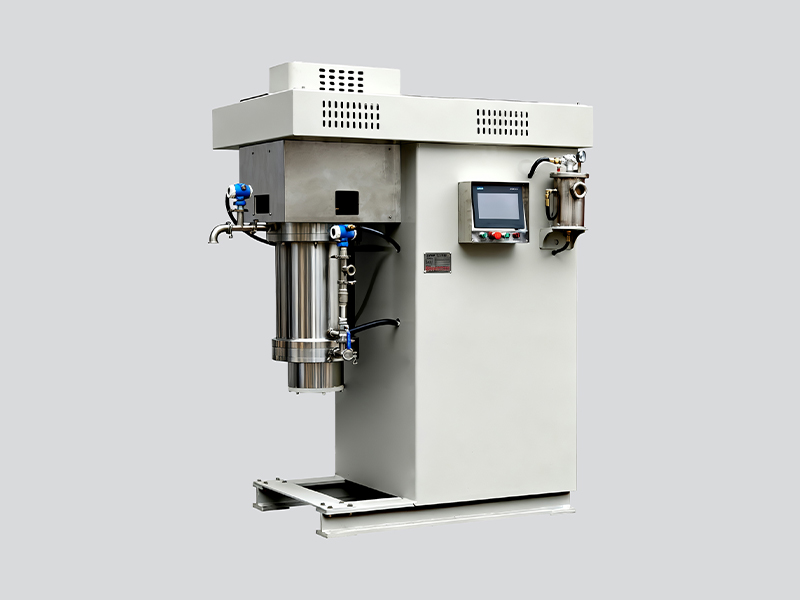
What Is a Ball Mill
You will find that a ball mill is a type of grinding machine. It uses a large, rotating cylinder to break down materials into smaller pieces. The main body of the ball mill is a strong steel cylinder. This cylinder often sits horizontally or at a slight angle. Inside, you will see grinding media such as steel, ceramic, or rubber balls. These balls help crush and grind the material. Liners made from manganese steel or rubber protect the inside shell. They also help lift and drop the balls, which improves grinding efficiency and reduces energy loss.
The main body is a rotating steel cylinder.
Grinding media include steel, ceramic, or rubber balls.
Liners protect the shell and boost grinding performance.
How Ball Mills Work
When you use a ball mill, the cylinder rotates. The balls inside move and interact with the material you want to grind. The grinding process can happen in different ways. The table below shows the main modes:
Mode | Description |
|---|---|
Cascade | Grinding bodies roll over, abrading the rock. |
Mixed | Both flying and rolling phases are present, combining impact and abrasion effects. |
Waterfall | Grinding bodies fall on the rock, primarily using impact to destroy it rather than abrasion. |
You can choose the right mode based on your material and desired result. Ball mills work well for both wet and dry grinding. They handle large volumes and can process tough materials that a bead milling machine might not manage as easily.
Common Uses
You will see ball mills in many industries. They play a key role in mining and mineral processing. Ball mills grind ore and help separate valuable metals. In construction, they help make cement, silicates, and glass ceramics. You can also use them in advanced materials and chemical production. For example, they grind raw ceramic materials and chemical powders for pharmaceuticals. In research labs, smaller ball mills prepare samples for analysis.
Mining and mineral processing
Cement, silicates, and glass ceramics production
Chemical and pharmaceutical powder production
Laboratory sample preparation
Tip: If you need to process large amounts of coarse material, a ball mill is often the best choice.
Bead Milling Machine Overview
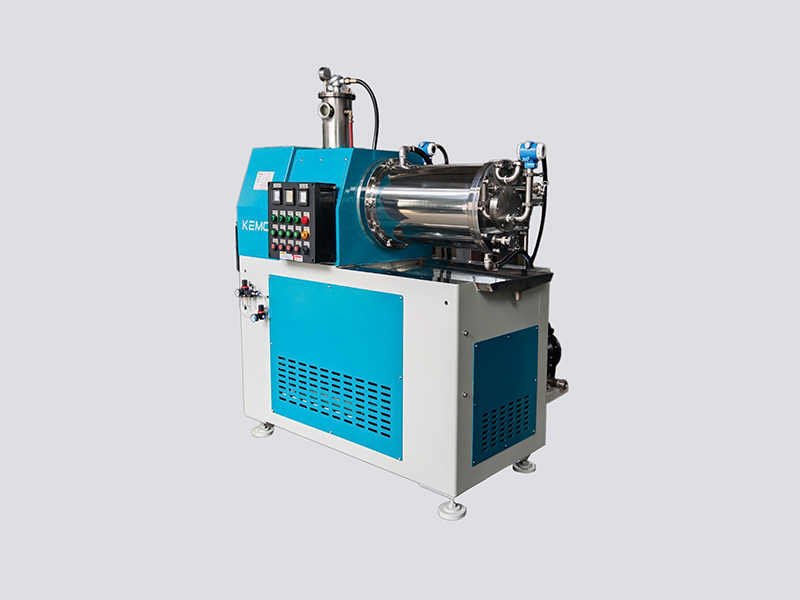
What Is a Bead Milling Machine
You can use a bead milling machine to grind and disperse materials into very fine particles. This machine uses a chamber filled with small beads, usually made of glass, ceramic, or steel. The beads range from 0.1 millimeters to a few millimeters in size. When you operate the machine, the beads move rapidly and collide with the material. This process breaks the material down to sub-micron or even nano-scale sizes. You often see bead milling machines in labs and factories that need precise and consistent results.
How Bead Milling Machines Work
You will notice that bead milling machines use a different grinding mechanism compared to ball mills. The machine relies on shear forces and high-frequency impacts from the small beads. These forces create intense energy, which helps you achieve finer particle sizes. The process usually runs continuously, so you can handle large batches without stopping. The table below shows how bead milling machines differ from ball mills:
Feature | Ball Mill | Bead Mill |
|---|---|---|
Grinding Media | Large, heavy media (steel balls or rods) | Small, uniform beads (0.1 mm to a few mm) |
Grinding Mechanism | Impact and attrition through cascading media | Shear forces and high-frequency impacts |
Target Particle Size | Coarse to medium powder (tens to hundreds of microns) | Sub-micron or nano-scale |
Processing Type | Batch processing | Continuous processing |
Tip: If you need to grind materials to a very fine size, a bead milling machine gives you better control and faster results.
Applications of Bead Milling Machines
You can use bead milling machines in many industries. These machines work well for grinding materials in liquid form and dispersing them evenly. You often find bead milling machines in the following areas:
Pigments
Adhesives
Battery slurries
Paints
Inks
Cosmetics
The table below shows some specific examples:
Industry/Process | Examples of Applications |
|---|---|
Pigments | Titanium dioxide (TiO2) dispersions, heavy color pastes. |
Industrial Adhesives | High-density glues, specialized mastics. |
Battery Slurries | Lithium-ion battery cathode/anode conductive pastes. |
You can rely on bead milling machines when you need to produce high-quality dispersions for paints, inks, and cosmetics. These machines help you achieve uniform particle sizes and stable mixtures.
Ball Mill vs. Bead Milling Machine
Grinding Media and Mechanism
You will notice a clear difference in the grinding media used by each machine. Ball mills use larger balls, usually made of steel or iron. These balls crush and grind materials through impact and rolling actions. In contrast, a bead milling machine uses much smaller beads. These beads can be made from ceramic, glass, or stainless steel. The small size of the beads allows for more contact points and faster grinding.
Type of Mill | Grinding Media Size | Materials Used |
|---|---|---|
Ball Mill | Larger (balls) | Typically steel or iron |
Bead Mill | Smaller (beads) | Ceramic, glass, or stainless steel |
The grinding mechanism also differs. Ball mills rely on impact and attrition as the balls tumble inside the rotating cylinder. You get a mix of crushing and grinding. A bead milling machine uses high-speed agitation. The small beads move rapidly and create intense shear forces. This action breaks down particles much faster and more evenly.
Tip: If you need to process tough, coarse materials, a ball mill works well. For fine, even grinding, a bead milling machine gives you better results.
Particle Size and Precision
You can achieve different particle sizes with each machine. Ball mills produce powders that range from tens to hundreds of microns. This range works for many bulk materials but does not reach the finest levels. A bead milling machine can grind materials down to sub-micron or even nano-scale sizes. This level of precision is important for industries like paints, inks, and pharmaceuticals.
Feature | Ball Mill | Bead Mill |
|---|---|---|
Target Particle Size | Coarse to Medium Powder (10s-100s of microns) | Sub-micron to Nano-scale Fineness |
A bead milling machine also gives you a narrower particle size distribution. You get more control over the final product. Ball mills create a broader range of particle sizes, which may not suit applications that need high precision.
Feature | Bead Mill | Ball Mill |
|---|---|---|
Particle Size Reduction | Sub-micron to nano-scale | Micron level |
Energy Efficiency | More energy-intensive per unit processed | More energy-efficient for coarse grinding |
Application | High-performance liquid dispersions (e.g., paint, ink) | Coarse grinding |
Note: Choose a bead milling machine if you need very fine particles and tight control over size.
Material Compatibility
You should consider the type of material you want to process. Ball mills handle larger volumes and coarser materials. They work well for both wet and dry processes. You can use them for mineral processing, cement, and ceramics. Ball mills are cost-effective for bulk grinding.
A bead milling machine is better for finer grinding and high-viscosity materials. It works best for pigments, dispersions, and sensitive products. You will often see bead milling machines in the production of inks, paints, pharmaceuticals, and coatings.
Mill Type | Best Suited For | Characteristics |
|---|---|---|
Ball Mill | Larger volumes, coarser materials | Cost-effective for wet and dry processes, broader particle sizes |
Bead Mill | Finer grinding, high-viscosity materials | Faster grinding, narrower particle size distributions, ideal for pigments and dispersions |
Ball Mill: Mineral Processing, Cement, Ceramics
Bead Mill: Inks, Paints, Pharmaceuticals, Coatings
Tip: If your material is sensitive to heat or needs a very fine finish, a bead milling machine is the better choice.
Energy Efficiency
You will find that energy efficiency affects your operating costs. Ball mills have lower energy efficiency. They use more power and require more maintenance because of wear on the grinding media and liners. This leads to higher operating costs, especially for long-term use.
A bead milling machine is 30-50% more efficient than a ball mill. It uses less energy, has lower media consumption, and produces less waste. You also benefit from shorter grinding times and higher throughput. These factors make bead milling machines more cost-effective for fine grinding and high-value products.
Machine Type | Energy Efficiency Impact | Operational Cost Benefits |
|---|---|---|
Ball Mills | Lower efficiency | Higher operating and maintenance costs due to wear parts. |
Bead Mills | 30-50% more efficient | Lower costs from reduced wear, lower media consumption, and cleaner operation. Higher throughput and shorter grinding times enhance cost-effectiveness. |
Note: For large-scale, coarse grinding, a ball mill may still be the best option. For fine, high-value products, a bead milling machine saves you money and energy.
Advantages and Limitations
Ball Mill Pros and Cons
You can rely on ball mills for many grinding tasks. These machines handle a wide range of materials and offer flexible process control. You can adjust the grinding settings to suit your needs. Ball mills work well for both wet and dry processes. You get high operational efficiency and versatile size reduction capacity. You can use ball mills for bulk processing and large volumes.
Advantages | Disadvantages |
|---|---|
Versatile size reduction capacity | High energy consumption |
High operational efficiency | Noise/vibration (85-95dB) |
Process control flexibility | Complex maintenance (liner changes every 2-5k hours) |
Wide material compatibility | N/A |
You may notice some drawbacks. Ball mills use a lot of energy. You will hear loud noise and feel vibration during operation. Maintenance can be complex. You need to change liners every few thousand hours. Ball mills also risk over-grinding, especially with sensitive materials. You may find them less effective for high-viscosity applications.
Tip: Choose a ball mill if you need to process large volumes or tough materials. Be prepared for higher energy use and regular maintenance.
Bead Milling Machine Pros and Cons
You can achieve faster grinding with bead milling machines. These machines use smaller media and produce finer particles. You get a narrower particle size distribution, which is important for paints, inks, and cosmetics. Bead mills work well with high-viscosity materials. You minimize the risk of over-grinding and get consistent results.
Aspect | Bead Mill Benefits | Ball Mill Limitations |
|---|---|---|
Grinding Speed | Grinds faster with smaller media | Handles larger volumes but less efficient for fine grinding |
Particle Size Distribution | Achieves narrower particle size distributions | Yields broader particle sizes |
Material Compatibility | Suitable for high-viscosity materials like paints | Less effective for high-viscosity applications |
Over-grinding Risk | Minimizes over-grinding risks | Higher risk of over-grinding |
Process Flexibility | Ideal for pigments and dispersions | Supports both wet and dry processes but less specialized |
You may face some limitations. Bead milling machines handle smaller batches. You may need more specialized equipment for certain materials. These machines work best for fine grinding and dispersions. You may not use them for bulk processing or very coarse materials.
Note: Select a bead milling machine if you need fine particles and work with sensitive or high-viscosity materials. You get faster results and better control, but you may need to process smaller batches.
Choosing the Right Machine
Key Factors to Consider
You need to look at several important factors before choosing between a ball mill and a bead milling machine. Each factor can change how well your grinding process works. The table below shows how these factors compare for each machine:
Factor | Ball Mill | Bead Mill |
|---|---|---|
Final Particle Size | Suitable for >10 microns | Necessary for sub-micron/nanoparticles |
Slurry Viscosity | Less effective with high viscosity | Better for high-viscosity materials |
Material Contamination | Higher risk of contamination | Lower risk with high-purity media |
Throughput and Scale | Ideal for large-scale processes | Used for smaller, high-value batches |
You should also think about the type of material, the particle size you want, and how sensitive your material is to temperature. These details help you match your needs to the right machine.
Factor | Influence on Choice |
|---|---|
Type of Material | You may need wet or dry grinding. This affects how well the mill works. |
Desired Particle Size | Finer particles need a bead mill. Coarser particles work well in a ball mill. |
Temperature | Some materials need careful temperature control to keep their properties. |
Tip: If you want to avoid contamination, choose a bead mill with high-purity beads. For large batches, a ball mill gives you better throughput.
Typical Scenarios and Recommendations
You can use these common scenarios to help decide which machine fits your needs:
Nanoparticle synthesis: Choose a bead milling machine. Use small, dense beads for the best results and less contamination.
Bulk powder reduction: Pick a ball mill. Medium or large balls give you strong impact grinding and good size control.
Material blending and homogenization: Both machines work, but intermediate media sizes help mix and grind at the same time.
High-viscosity slurries: Bead mills handle thick materials better and give you a finer, more even result.
Temperature-sensitive materials: Bead mills often run cooler, so they protect materials that can change with heat.
Note: Always match your machine to your material and your final product goals. This helps you get the best performance and quality.
You now know the key differences between a ball mill and a bead milling machine. Ball mills work best for large, coarse materials. Bead mills give you finer, more precise results. Think about your material, desired particle size, and process needs before you choose. If you have unique requirements or want expert advice, reach out to a specialist or explore more resources on grinding technology.
FAQ
What is the main difference between a ball mill and a bead milling machine?
You use a ball mill for larger, coarser materials. You use a bead milling machine for finer, smaller particles. The grinding media size is the key difference.
Can you use both machines for wet and dry grinding?
You can use a ball mill for both wet and dry grinding. You usually use a bead milling machine for wet grinding because it works best with liquid slurries.
Which machine gives you finer particle sizes?
You get finer particle sizes with a bead milling machine. The small beads break materials down to sub-micron or nano levels.
Is one machine better for temperature-sensitive materials?
You protect temperature-sensitive materials better with a bead milling machine. It runs cooler and reduces heat buildup during grinding.
How do you choose the right machine for your process?
You look at your material type, desired particle size, batch size, and sensitivity to heat. You select a ball mill for bulk, coarse grinding. You pick a bead milling machine for fine, precise results.


