


How to evaluate three roll mill supplier quality and manufacturing capabilities
A three roll mill is a long-term capital investment. Price alone tells you very little about the value you receive over the next decade. You need a structured evaluation before you commit.
Four areas deserve your attention: technical performance, manufacturing capability, application fit, and compliance and cost. Each area gives you concrete inspection points, verification methods, and questions to put to every three roll mill supplier on your shortlist.
Documented evidence, on-site observation, and sample testing form the strongest basis for a decision. Use all three together. A supplier who welcomes every check earns your confidence faster than one who offers paperwork alone.
Key Takeaways
Check technical specifications and request documented evidence for roller precision, speed control, and gap adjustment.
Visit the supplier's factory to verify in-house manufacturing and quality control processes.
Test your own material with the supplier to confirm application fit and scalability.
Verify certifications and calculate total cost of ownership, including support and downtime.
Use a fixed evaluation sequence: define requirements, request evidence, audit, test, and compare costs.
Assessing technical performance
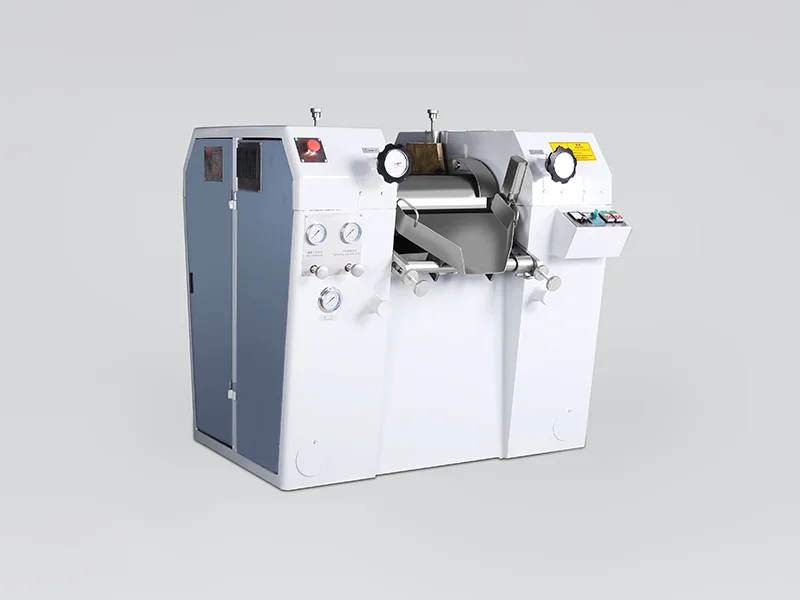
Technical performance separates a mill that holds tolerance for years from one that drifts within months. You need documented answers, not verbal assurances. Ask each supplier to specify four parameters in writing: target fineness, roller material, gap control method, and product model. These parameters directly determine how the mill behaves with high-viscosity materials. A supplier who states a fineness range of 1–5μm and names the roller alloy behind it gives you something to verify. A vague answer gives you nothing.
Roller precision and surface quality
Roll quality, nip control, and thermal management define performance. Request documentation on how the supplier controls each factor in the design. Roller material deserves close attention. Centrifugally cast dual-metal alloy rollers with surface hardness up to HS 70-75 resist wear across long production runs. For metal-free environments, such as certain electronic pastes, ask about optional ceramic rollers.
Surface quality and flatness tracking matter just as much. A supplier should monitor both as routine production data, because zero-defect output depends on them. Ask how the factory measures roller flatness and parallelism, and request the inspection records that accompany each unit. The depth of the supplier's technical documentation also signals application knowledge. A manufacturer who publishes guidance on choosing and operating a mill for high-viscosity materials understands the process, not just the hardware.
Speed control and gap adjustment
Speed and gap settings decide your real-world results. Request the manufacturer's recommended speed range for each model under consideration. Then confirm the supplier supports trial runs on your material. Trial runs let you determine optimal settings before you commit capital, and they reveal whether the supplier's team can guide you toward them.
Gap control deserves the same scrutiny. Ask which method the supplier uses and how the design holds the nip stable under load. The three rolls rotate in opposite directions at different speeds, and that speed differential generates the shear force that crushes agglomerates. Small variations in gap or speed show up quickly in dispersion quality.
Use this checklist to organize the technical comparison across shortlisted suppliers:
Parameter | What to request | Why it matters |
|---|---|---|
Fineness | Stated range (e.g., 1–5μm) | Sets achievable dispersion |
Roller material | Alloy specification, hardness, ceramic option | Governs wear life and contamination control |
Gap control | Method and stability under load | Protects batch consistency |
Speed range | Recommended range per model | Matches your material and throughput |
Documentation | Flatness records, operating guidance | Reveals process knowledge |
Strong technical performance rests on evidence you can inspect. Written specifications, inspection records, and a trial run together tell you more than any brochure.
Verifying three roll mill supplier manufacturing capability
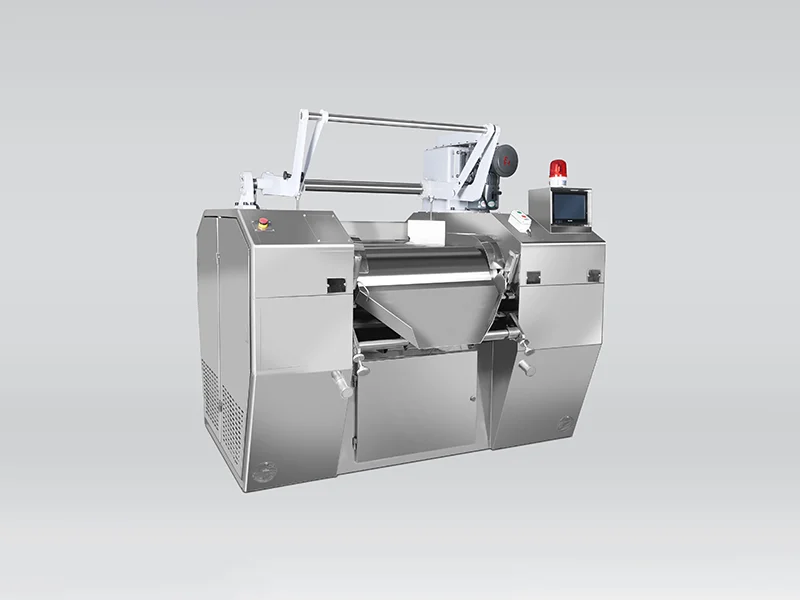
Technical specifications tell you what a mill should do. Manufacturing capability tells you whether the supplier can deliver that performance consistently, unit after unit. A factory visit and a documentation review answer questions that a three roll mill supplier's brochure cannot.
Facility audit and production equipment
A facility audit confirms how much of the mill the supplier actually builds. Ask whether the supplier engineers and manufactures critical mill components in-house. Rollers, frames, and hydraulic systems are the components that matter most. A supplier who casts and machines rollers under its own roof controls the variables that affect precision. A supplier who assembles from purchased parts depends on others for quality. Neither approach is wrong on its own. In-house capability simply shifts more responsibility, and more accountability, onto the supplier you choose. The audit answers a simple question: who stands behind the precision?
The audit should also confirm whether the supplier performs refurbishment and repair of rolling mill equipment. A manufacturer with repair experience sees how its mills wear in the field. That feedback loop improves design decisions over time. Ask how the supplier handles a worn roller or a damaged frame. The answer shows whether service is a core business or an afterthought. Capacity matters too. Ask how many units the line produces in a typical month and how the supplier schedules custom orders.
Bring a written question list to every audit. Which components are made in-house? How is roller parallelism verified? What records accompany each unit? Walk the production floor and watch the answers in action. Observe how the factory stores rollers, measures them, and moves them between stations. Check the condition of the machining and grinding equipment. The physical environment tells you whether stated procedures match daily practice.
Quality control and documentation
Quality engineering practices reveal manufacturing reliability. Look at how the three roll mill supplier defines quality requirements and how it verifies them. A disciplined supplier writes the requirement down, sets an inspection point, and records the result. Ask for QC documentation and inspection records before the visit. Review them during the audit. Look for records on roller hardness, surface finish, and parallelism. Request a sample record set for a recent unit and trace it back to the inspection station. Ask what happens when a measurement falls outside the limit. A clear corrective-action process signals a mature system.
Documentation depth varies across suppliers. Some provide full inspection records with each unit. Others provide a basic certificate. Match the documentation level to your own quality system. A regulated production environment needs traceable records. A general-purpose workshop may need less. Frame this as a fit question, not a ranking.
In-house capability and specialization deserve the same neutral treatment. A specialized manufacturer offers deep process knowledge and tight control over critical parts. A broader supplier may offer flexibility across product lines. Weigh each model against your priorities.
The strongest verification combines a facility walk, a documentation review, and direct questions. Together they show you whether the supplier's manufacturing discipline matches its technical claims. Shortlist suppliers who answer every question with evidence.
Evaluating application fit
Material compatibility and scalability
Match the mill configuration to your material before you compare prices. Start with viscosity. Three roll mills handle viscosities up to 1,000,000 cPs without media clogging, a clear advantage over bead mills on heavy pastes. Next, assess temperature sensitivity and target fineness. A heat-sensitive product needs cooling capacity built into the design. A fine dispersion target needs roller precision you can verify.
Scale options deserve equal weight. Consider Zili's range as one neutral example. Lab and pilot mills (SD/SDS) suit R&D and formula development. Hydraulic production mills (SYS/SYP) serve high-capacity manufacturing. Manual mills (S/SG) offer a cost-effective route for traditional operations. Optional ceramic rollers support metal-free environments. Each configuration fits a different stage of your business. Choose the one that matches your current volume and your growth plan.
Temperature control often decides success with heat-sensitive products such as UV inks. The open-roller design exposes material to ambient air and allows rapid heat dissipation. Full-length internal water circulation carries heat away from the roll surface along its entire length. Ask any three roll mill supplier to explain how their design manages heat during a long production run.
Documented test runs
Request documented grinding and dispersion test runs on your own material type. Send ink, coating, or color paste samples and ask for a written report. The report should record the settings used, the fineness achieved, and the temperature behavior observed. A supplier who runs your material and documents the result gives you evidence you can compare across shortlists.
Confirm scalability from lab to production. A formula that disperses well on a pilot mill should hold its quality on a full-size hydraulic unit. Ask the supplier to explain how they translate lab settings to production settings. Then verify the answer with a trial on the production model. Documented test runs turn application fit from a claim into a measured result.
Checking compliance and cost
Certifications and safety standards
Compliance claims need evidence you can check. Ask each three roll mill supplier for applicable certifications, safety standard documentation, and the verification method behind every claim. A certificate number you can look up carries more weight than a logo on a brochure. Request the safety documentation for guarding, electrical systems, and pressure components on hydraulic models. Then ask how the supplier verifies each claim internally. A supplier who names the test and the record behind it gives you something to audit.
Treat unverified claims as open questions, not disqualifications. Some suppliers hold certifications for specific markets only. Confirm that the certification covers the model and voltage configuration you plan to buy. Ask who performs the verification and how often. Document every answer in your comparison file.
Total cost of ownership and ROI
A transparent supplier explains the factors affecting three roll mill price before you purchase. Ask for a written breakdown of what drives equipment value: roller material, drive configuration, control system, and cooling design. Compare those factors across quotes instead of comparing totals alone.
Build your total cost of ownership from six parts: purchase price, installation, consumables and rollers, maintenance, downtime, and after-sales technical support. Support deserves real weight. Guidance on speed adjustment and trial-based optimization keeps your settings productive long after installation. Downtime costs vary by operation, so estimate your own exposure rather than accepting a generic figure.
Frame ROI around output consistency and support terms. A mill that holds fineness batch after batch returns value through fewer rejects. A specialized manufacturer fits operations that need deep process control. A broader supplier fits buyers who value flexibility across product lines. Weigh each against your priorities.
Evaluate every three roll mill supplier in a fixed sequence: define your requirements, request documented evidence, audit the facility, run sample tests, and compare total cost of ownership. No single criterion decides the outcome. Technical precision, manufacturing discipline, application fit, compliance, and cost carry equal weight.
Use the questions and checklists above as a scoring framework. Score each shortlisted supplier against the same criteria, and record the evidence behind every score.
Then take one practical step. Request a sample trial on your own material and schedule a facility audit before you make the final selection. Both checks reveal how the mill performs under your conditions.
FAQ
How do I verify a supplier's roller parallelism claim?
Ask for the inspection record that accompanies each unit. Request the measurement method and the acceptance limit in writing. Then watch the check happen during your facility audit. A supplier who measures rollers in front of you and hands over the record gives you evidence you can compare across shortlists.
What should I send for a sample trial?
Send the material you actually run: ink, coating, or color paste. State your target fineness and your viscosity range. Ask for a written report covering settings used, fineness achieved, and temperature behavior. Confirm the supplier can scale those settings from a lab mill to a production model.
How do I compare quotes from different suppliers fairly?
Ask each supplier for a written breakdown of price drivers: roller material, drive configuration, control system, and cooling design. Compare those factors line by line instead of comparing totals. Add installation, consumables, maintenance, downtime, and support terms to reach a true total cost of ownership.
What support terms should I confirm before purchase?
Confirm guidance on speed adjustment and trial-based optimization after installation. Ask who handles roller refurbishment and repair, and how quickly. Check whether training is included. Support quality affects your output consistency long after the warranty ends, so weigh it alongside the purchase price.
How long does a facility audit take, and what should I see?
Plan a half day on the production floor. Watch roller storage, measurement, and machining. Review QC records at the inspection station. Ask which components are made in-house. A focused visit answers more than a stack of brochures, and it shows whether daily practice matches stated procedure.


