


What are the key differences between a sand mill and a bead mill
You have likely seen the terms "sand mill" and "bead mill" used interchangeably across equipment catalogs. In modern industrial practice, these names describe the same family of wet grinding machines. The real distinction comes down to two factors: the grinding media (natural sand versus engineered beads) and the machine's design subtype (horizontal or vertical, disk or pin configuration).
So which media suits your material best? Which design delivers higher efficiency for your production scale? This article breaks down terminology, media properties, design variations, application suitability, and cost factors. With this information, you can make a confident purchasing decision for your specific milling needs.
Key Takeaways
Sand mills and bead mills are the same machine type, but they differ in grinding media and design.
Engineered beads last longer and give you better particle size control than natural sand.
Horizontal mills work best for large-scale production, while vertical mills save space and handle thick pastes.
Choose your media and mill design based on your product needs, like purity for batteries or fine dispersion for paints.
Ceramic chambers and cooling systems reduce maintenance and energy costs over time.
Sand Mill and Bead Mill Terminology
Historical Use of Sand as Media
Early grinding machines used natural silica sand as the grinding media. You would fill a chamber with this sand and rotate a shaft to agitate it. The sand particles would collide with your material and break it down into smaller pieces. This approach worked well for basic dispersion tasks in paints and simple coatings.
Natural sand offered one clear advantage: low cost. You could source it easily and replace it when it wore down. However, sand grains vary in size and shape. This inconsistency led to uneven grinding results. The sand also wore out quickly and could leave residue in your final product.
Modern Shift to Bead Technology
Today, the industry has shifted almost entirely to engineered beads. Manufacturers now produce ceramic, glass, and zirconia beads with precise size distributions. These beads last much longer than natural sand and deliver consistent grinding performance. You get tighter control over your final particle size.
This shift means the term "sand mill" now describes machines that actually use beads. The name stuck from historical usage, but the technology inside has changed. When you compare a sand mill to a bead mill today, you are really comparing design types and media characteristics, not two separate machine classes. Both use the same fundamental wet grinding principle.
The real differences lie in chamber orientation, agitator design, and the specific media you choose. A horizontal mill with zirconia beads performs differently than a vertical mill with glass beads. Your material properties and production goals determine which configuration works best for your operation.
Grinding Media: Sand vs Beads
Size and Material Impact
The grinding media you select shapes every aspect of your milling result. Natural sand particles vary widely in size and shape. You cannot control their distribution, so your final product shows a broad particle range. Sand grains also carry trace minerals. These minerals can leach into your formulation and contaminate sensitive products.
Engineered beads solve this problem. Manufacturers sort zirconia, glass, and steel beads into tight size bands. You choose the bead diameter that matches your target particle size. Smaller beads create finer grinds because they offer more contact points per unit of volume. Larger beads break down coarse agglomerates faster. This control gives you a narrow particle distribution and repeatable results from batch to batch.
Material choice matters just as much as size. Glass beads work well for low-viscosity materials and moderate hardness. Zirconia beads resist wear far better and suit demanding applications like battery slurries. Steel beads deliver high impact energy, but they can introduce metal contamination. For pharmaceutical and electronic applications, you need a metal-free path from start to finish.
Zili builds its mills with zirconium oxide or silicon carbide chambers. These ceramic surfaces prevent metal contact during grinding. Your product stays pure, and you avoid the costly filtration steps that metal contamination demands. The Nano-Grade Bead Mills and Sand Mills product line applies this contamination-free design across every model.
Cost and Wear Resistance
Natural sand costs less upfront. That advantage disappears over time. Sand wears down quickly, so you replace it often. Each replacement means downtime, labor, and lost production. Worn sand also loses its grinding power, which drags down your efficiency.
Engineered beads carry a higher purchase price. They repay that cost through a much longer service life. Zirconia beads resist abrasion exceptionally well and hold their shape through many production cycles. You replace them far less often, and your process stays stable between changes.
The table below summarizes the key trade-offs.
Factor | Natural Sand | Engineered Beads |
|---|---|---|
Purchase cost | Low | Higher |
Wear rate | Fast | Slow |
Particle size control | Poor | Tight |
Contamination risk | High | Low with ceramic media |
Replacement frequency | Frequent | Infrequent |
Your total operating cost depends on more than the media price. Consider media consumption, downtime for changes, product rejection from contamination, and energy use. A sand mill running natural media may look cheap on paper. In practice, the hidden costs of wear and contamination often outweigh the savings.
Bead selection also affects your chamber lining. Hard media like zirconia demand durable chamber materials. Zili pairs its mills with ceramic linings that stand up to continuous bead impact. This combination extends the life of both the media and the machine. You get consistent dispersion quality without constant maintenance interruptions.
The right media choice comes down to your product requirements. Coarse, cost-sensitive applications may tolerate natural sand. Precision applications in batteries, pharmaceuticals, and high-end inks demand engineered beads with ceramic chambers. Match your media to your quality standard, and your milling operation will reward you with stable, repeatable output.
Horizontal and Vertical Mill Designs
Horizontal Sand Mill Features
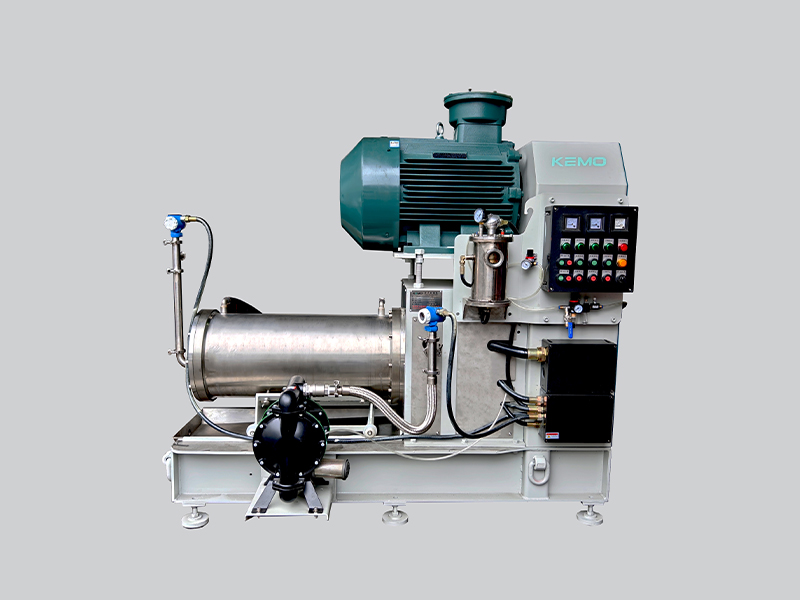
A horizontal mill places the grinding chamber on its side. Material flows through the chamber continuously from one end to the other. This continuous flow design gives you steady output and a narrow particle distribution. You feed material in, and the mill pushes it through the bead bed without interruption.
This layout suits large-scale production. Battery slurry manufacturers and paint producers rely on horizontal mills for round-the-clock operation. The Horizontal Sand Mill for Paint disperses pigment agglomerates efficiently. You get better gloss and stronger color saturation in your finished coating. The sealed chamber also handles medium-to-high viscosity materials when you pair it with zirconia beads.
Vertical Bead Mill Benefits
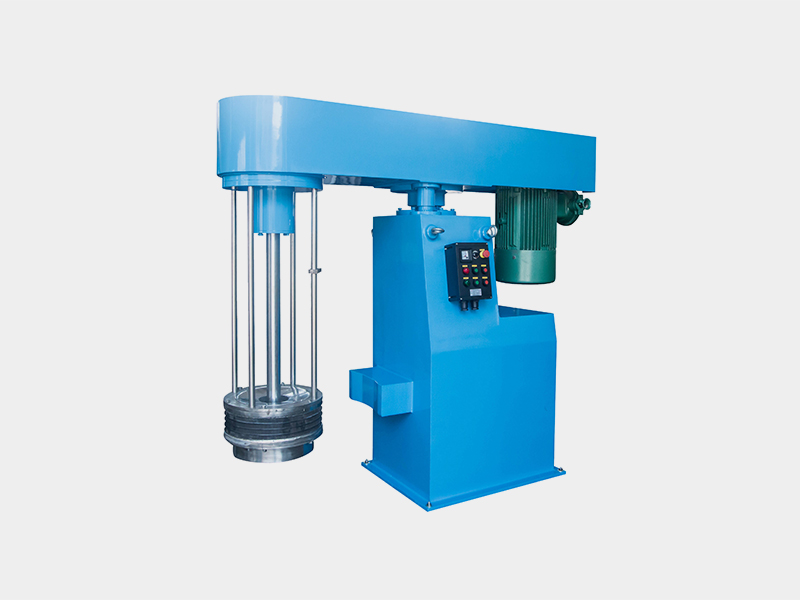
A vertical mill stands upright and takes up far less floor space. You can fit one into a crowded production room without rearranging your entire layout. Cleaning also becomes simpler because gravity helps drain material from the chamber after each batch.
Small-batch and high-viscosity work fits this design well. The Vertical High-Viscosity Sand Mill handles dense pastes that would stall a horizontal unit. Its vertical orientation keeps heavy material moving through the bead bed. For research and development, the Laboratory Sand Mill provides a compact option. You can test formulations and gather scale-up data before committing to a full production line.
Your choice between these two layouts depends on your production goals. Continuous, high-volume output points to a horizontal design. Space constraints, frequent color changes, or thick pastes favor a vertical mill. Many facilities run both types side by side to cover different product lines.
Application Suitability by Industry
Paints, Inks, and Coatings
Paint manufacturers depend on uniform pigment dispersion. You need consistent color from batch to batch. A horizontal sand mill delivers this consistency. Material flows through the chamber continuously. The beads break down pigment agglomerates into fine particles. This process improves gloss and color saturation.
The Horizontal Sand Mill for Paint handles this task efficiently. You load your pigment paste into the machine. The mill disperses particles evenly throughout the liquid. Your coating gains a smooth finish without visible specks. Ink producers also benefit from this technology. High-end printing inks require tight particle size control. A mill with zirconia beads provides that precision. You get better flow properties and stronger color strength.
For smaller batches, the Agitator Basket Bead Mill works well. It combines dispersing and milling in one unit. You can switch between colors quickly. This flexibility serves companies that produce multiple formulations. The easy cleaning design reduces downtime between changeovers.
Battery Slurries and Pharmaceuticals
Battery manufacturers need sub-micron particle sizes. Your electrode slurry must have a uniform texture. Large particles can reduce battery performance. Bead mills with zirconia media achieve the fineness you need. The engineered beads grind materials down to nanometer range. You control the final size by choosing the right bead diameter.
Zili's Nano-Grade Bead Mills use zirconium oxide chambers. This metal-free construction prevents contamination. Your battery materials stay pure throughout grinding. The advanced cooling system keeps temperatures controlled. You protect heat-sensitive materials from degradation. The dynamic centrifugal screen separates beads from product without clogging.
Pharmaceutical applications demand the same purity. Drug formulations require consistent particle sizes for proper absorption. Metal contamination could ruin an entire batch. A bead mill with ceramic linings solves this problem. The Vertical Bead Mill works well for small to medium batches. Its compact design fits research labs and production suites. You test new formulations on the laboratory bead mill. The results scale up predictably.
The common thread across these industries is quality control. You choose your media and machine design based on your product standards. For paints and inks, a mill with engineered beads delivers the optical properties you want. For batteries and drugs, a bead mill with contamination-free construction protects your formulation. Zili offers models for each application, from laboratory scale to full production.
Efficiency and Performance Differences
Your mill's efficiency determines how quickly you reach the target particle size and how much energy you consume. Three factors control this balance: media size, mill speed, and chamber design. Each element influences grinding action and throughput. When you understand their interactions, you can optimize your process for better results and lower costs.
Particle Size Reduction Capability
The diameter of your grinding media directly sets the lower limit of particle size. Smaller beads create more contact points inside the chamber. Each collision between beads transfers energy to break your material. So to achieve sub-micron particles, choose beads with a diameter around 0.1 to 0.5 millimeters. Larger beads, such as 1 to 2 millimeters, work better for initial grinding of coarse agglomerates.
Mill speed controls the force of each impact. Faster rotation increases kinetic energy delivered to your material. But higher speeds also generate friction heat. If your product is heat-sensitive, heat can degrade its quality. Zili solves this with advanced cooling systems. Dual cooling jackets remove excess heat from the chamber walls. Your material stays at a safe temperature, and you can run the mill at productive speeds.
Chamber design shapes how material flows through the mill. A horizontal chamber forces material to travel along a straight path through the bead bed. This design provides uniform residence time for every particle. You get a narrow particle size distribution. A vertical design may allow some material to move quickly through areas with less bead density. This can produce a broader distribution.
Zili's mills incorporate dynamic centrifugal screens at the outlet. These screens separate beads from the product continuously. The screen rotates to prevent clogging and maintain a consistent bead fill level. Your mill operates steadily without interruptions for screen cleaning. This design keeps particle reduction efficient and repeatable from batch to batch.
Energy Consumption and Throughput
Energy efficiency directly affects your operating cost. A mill that wastes power on heat or friction produces less usable grinding work. Several design features help you conserve energy while maximizing throughput.
Horizontal mills offer continuous flow. Material enters one end and exits the other without stopping. This design allows high throughput for large production runs. You process more material per hour compared to batch mills.
Advanced cooling reduces thermal energy loss. Heat generated during grinding must be removed efficiently. Zili's dual cooling jackets maintain stable chamber temperatures. Cooler operation means less energy escapes into the environment. Most of your power goes into particle reduction instead of heating the product.
Dynamic centrifugal screens boost throughput by allowing rapid product exit. These screens let dispersions flow out while retaining beads inside the chamber. You can increase flow rates without losing grinding media. Faster discharge means shorter cycle times and higher throughput per day.
Media wear also affects energy use. Hard beads like zirconia stay round for many hours of service. Round beads transfer impact energy more effectively than worn, irregular media. Your mill maintains peak grinding efficiency throughout the media's life. You avoid the gradual performance drop that comes with degraded sand.
Consider chamber materials as well. Zili uses zirconium oxide or silicon carbide chambers. These ceramic surfaces resist wear from bead impacts. The chamber holds its shape over years of use. Consistent chamber geometry keeps energy use stable and predictable.
A sand mill running natural media may seem economical initially. But engineered beads with ceramic chambers deliver higher throughput and lower energy consumption over time. In production environments where every kilowatt counts, the bead mill with advanced cooling and dynamic screening gives you a clear performance advantage.
Maintenance and Cost Considerations
Your mill's reliability directly affects your production schedule and bottom line. Regular maintenance tasks include media replacement, seal inspection, and chamber wear checks. How you manage these tasks determines your total cost of ownership over the machine's life.
Wear Parts and Media Replacement
Chamber lining material shapes your maintenance intervals. Steel linings cost less initially but wear faster when you use hard media. Ceramic linings resist abrasion far better and maintain their geometry through years of service. Polyurethane linings offer good wear resistance for soft media but degrade quickly with zirconia beads.
Zili builds its mills with zirconium oxide or silicon carbide chambers. These ceramic materials withstand continuous bead impact without wearing down. You replace the lining far less often than you would with a steel chamber. This saves you labor hours and keeps your mill running.
Seal life also matters for uptime. A worn shaft seal can leak slurry and ruin bearings. Zili's mills use robust seals that resist wear from abrasive media. Dual cooling jackets surround the chamber to control temperature. Cool operation extends seal and bearing life significantly.
Media replacement should be simple and quick. Your design should let you drain old media and load fresh beads without disassembling the chamber. Zili's heavy-duty machines include this feature. The Heavy-Duty Bead Milling Machine works with pure zirconia ceramic media. Long media life means fewer replacements and lower maintenance cost over the machine's life.
A traditional sand mill using natural media requires frequent sand changes. You spend more time refilling and cleaning. The heavy-duty design minimizes this burden.
Operational Expenses Over Time
Your operating cost includes media consumption, energy use, and labor for maintenance. Engineered beads last longer than natural sand but cost more upfront. The longer life offsets the higher purchase price.
Downtime is expensive. Every hour your mill sits idle for maintenance counts as lost production. Zili's robust construction reduces unplanned stops. The dual cooling jackets and durable seals keep the machine running shift after shift.
Energy efficiency also affects your operating cost. A mill that wastes power on friction or excessive heat generation consumes more electricity. Ceramic chamber linings reduce friction and heat buildup. You get more grinding work per kilowatt-hour.
Consider the total cost of ownership across three years. A lower-priced mill with frequent media changes and seal replacements often costs more than a higher-quality unit. The Heavy-Duty Bead Milling Machine delivers long service intervals with zirconia media. Your team spends less time on maintenance and more time on production.
Your choice between a sand mill and a bead mill comes down to two factors. The first factor is the grinding media. Natural sand works well for coarse, low-cost tasks. A sand mill using traditional media still serves basic applications. The second factor is machine design. Horizontal layouts handle high-volume production best.
For precision work, you need different tools. Battery slurries, pharmaceuticals, and high-end inks demand engineered beads. Zili's Nano-Grade series uses ceramic media and metal-free chambers. This combination delivers high efficiency and narrow particle distribution. You also get low operational costs.
Evaluate your material viscosity before you buy. Check your required fineness. Consider your production scale. These factors guide you to right equipment.
FAQ
Can I use natural sand in a modern bead mill?
You can, but you probably should not. Natural sand wears down fast and varies in size. It also carries trace minerals that can contaminate your product. Engineered beads cost more upfront, yet they deliver consistent results and last far longer.
Which mill design works best for high-viscosity pastes?
A vertical mill handles thick pastes well. Gravity keeps heavy material moving through the bead bed. The Vertical High-Viscosity Sand Mill suits dense formulations that would stall a horizontal unit. You get reliable flow without constant adjustments.
How do I choose the right bead size for my material?
Match bead diameter to your target particle size. Smaller beads create finer grinds because they offer more contact points. Larger beads break down coarse agglomerates faster. For sub-micron results, choose beads in the 0.1 to 0.5 millimeter range.
Do I need a metal-free chamber for my application?
It depends on your quality standard. Battery slurries, pharmaceuticals, and electronic pastes demand metal-free processing. Zili builds mills with zirconium oxide or silicon carbide chambers. These ceramic surfaces prevent contamination and protect sensitive formulations.
What maintenance tasks keep my mill running reliably?
Check seals, chamber linings, and media regularly. Ceramic linings resist abrasion far better than steel. Zili's dual cooling jackets control temperature and extend seal life. Replace worn media promptly to maintain grinding efficiency and consistent output.


