


3 roller grinder vs traditional mills: differences in performance and efficiency
When you compare a 3 roller grinder with a traditional mill, the performance differences become clear. This type of mill can lower energy consumption by 15–25% compared to a hammer mill. For instance, a roller mill uses 8–12 kWh per ton of material, while a hammer mill uses 10–16 kWh per ton. You also achieve tighter particle size consistency and lower maintenance costs over time. The trade-off is a higher initial purchase price. This article equips you with the data to evaluate energy use, particle control, and long-term expenses.
Key Takeaways
A 3 roller grinder saves 15-25% energy per ton compared to a hammer mill. This reduces your electricity costs.
You achieve precise particle size control with gap settings down to 1 micron. This improves product quality and consistency.
Maintenance is easier for a 3 roller grinder. It has no grinding media to replace. Rollers last longer with hardened alloys.
A 3 roller grinder handles thick pastes up to 1,000,000 centipoise. Bead mills clog at lower viscosities.
Choose a 3 roller grinder for lower long-term costs. Traditional mills are cheaper upfront but cost more to run.
3 Roller Grinder vs Traditional Mill Basics
Three Roller Grinder Operation
A 3 roller grinder works through a simple mechanical principle. Three horizontal rollers sit close together and spin in opposite directions. Each roller turns at a different speed, and the typical speed ratio is 1:3:9. You feed the material between the slow feed roll and the center roll. The paste then moves to the fast-spinning apron roll. This speed difference creates intense shear forces. Those forces crush agglomerates and disperse particles down to sub-micron fineness. A scraper knife then removes the processed paste from the final roller.
The open-roller design gives you two practical advantages. First, you get superior temperature control because the rollers expose the material to air. Second, the design allows outgassing, which matters for reactive formulations. Gap precision between the rollers determines your final particle size. You can adjust this gap to control fineness down to the micron level.
Common Traditional Mill Designs
Traditional mills use different mechanical approaches. A hammer mill relies on rapidly rotating hammers that strike and shatter material against a screen. This design suits brittle, dry feedstocks. A ball mill tumbles heavy balls inside a rotating cylinder. The balls cascade and crush material through impact and attrition. Ball mills handle hard, abrasive materials well. A bead mill uses small grinding media inside a chamber. The media agitate at high speed to break down particles in liquid suspensions.
Each traditional design has trade-offs. Hammer mills struggle with heat-sensitive or sticky materials. Ball mills consume significant energy and produce a wider particle size distribution. Bead mills work well for lower-viscosity slurries but cannot process extremely thick pastes. These mills also lack the tight gap control you find in a three roll mill. That difference shapes everything from energy use to final product quality.
Energy Efficiency and Consumption
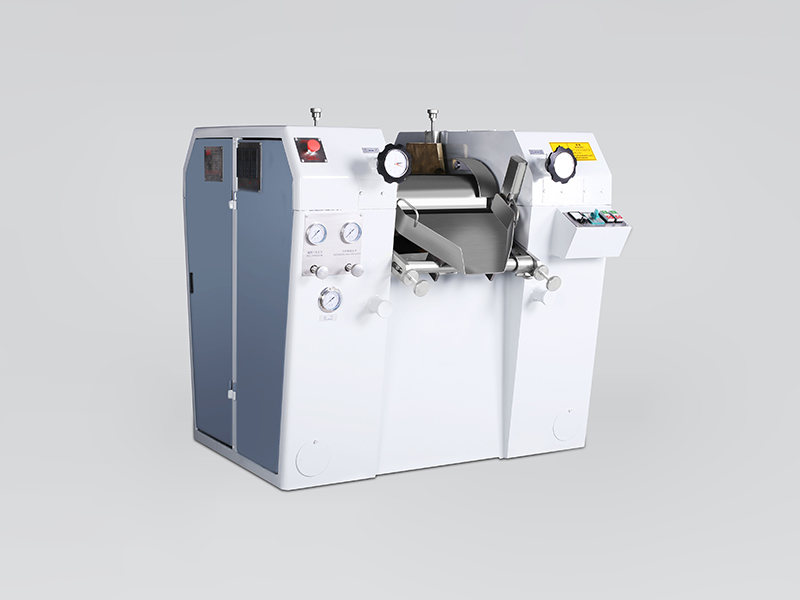
Motor Power and Throughput
Motor power tells you how much electricity a mill draws. Throughput tells you how much material it processes in a given time. The ratio between these two numbers reveals the true energy efficiency of any grinding machine. You want more material moved per kilowatt consumed.
Compare a hammer mill and a roller mill with the same motor power. A hammer mill with a 15 kW motor processes 400–1200 kg/hr. A roller mill with a 15 kW motor processes 1500–3000 kg/hr. The roller mill moves more material with the same energy input. That difference compounds over every production shift.
A 3 roller grinder takes this principle further. The three-roll design uses direct shearing action between rollers. This approach lowers frictional energy loss compared to media mills. Media mills need substantial energy to continuously agitate grinding media. The three-roll mill avoids that constant agitation demand entirely.
For fine output below 2 mm, a roller mill is more energy-efficient and produces a tighter particle distribution, whereas hammer mills produce a wider spread with both fines and oversize.
Quantified Energy Savings
The energy gap between mill types becomes clear when you look at specific consumption figures. Roller mills show 15–25% lower energy consumption than hammer mills. A roller mill uses 8–12 kWh per ton of material. A hammer mill uses 10–16 kWh per ton. You save real money on every ton you process.
Vertical roller mills deliver even larger savings over ball mills. The table below shows the comparison at the same capacity and fineness.
Metric | Vertical Roller Mill | Ball Mill | Reduction |
|---|---|---|---|
Specific energy consumption (kWh/t) | 20–30 | 33–42 | 20–38% |
Energy saving factor | 1.3–1.5× lower | – | – |
The typical energy reduction of a vertical roller mill versus a ball mill reaches 30%–50% lower under the same capacity and fineness conditions. These savings accumulate quickly in continuous production environments.
Zili's three roll mill also benefits from precise gap control reducing waste. When you set the gap accurately, you avoid over-grinding material that already meets specification. You also prevent under-grinding that forces you to run material through the mill again. Each unnecessary pass wastes energy. Mechanical hand wheel gap adjustment on steel rolls gives you 5 micron repeatability. Hydraulic systems with digital readout improve that to 2 micron repeatability. Servo-driven systems reach 1 micron step resolution with recipe recall. Tighter gap control means less wasted energy per production batch.
The adjustable gap spacing between rollers lets you fine-tune size reduction based on pigment hardness, medium viscosity, and target fineness. This flexibility gives you an advantage in achieving uniform pigment dispersion. Uniform dispersion matters for color strength, gloss, and stability in the final product. You get better output quality with fewer passes through the machine.
Electronically controlled gap adjustment systems reduce operator error and improve reproducibility. Some models use feedback loops that automatically adjust roller spacing based on real-time viscosity or particle size measurements. This automation optimizes grinding without manual intervention. You save energy and labor at the same time.
Particle Size Control and Uniformity
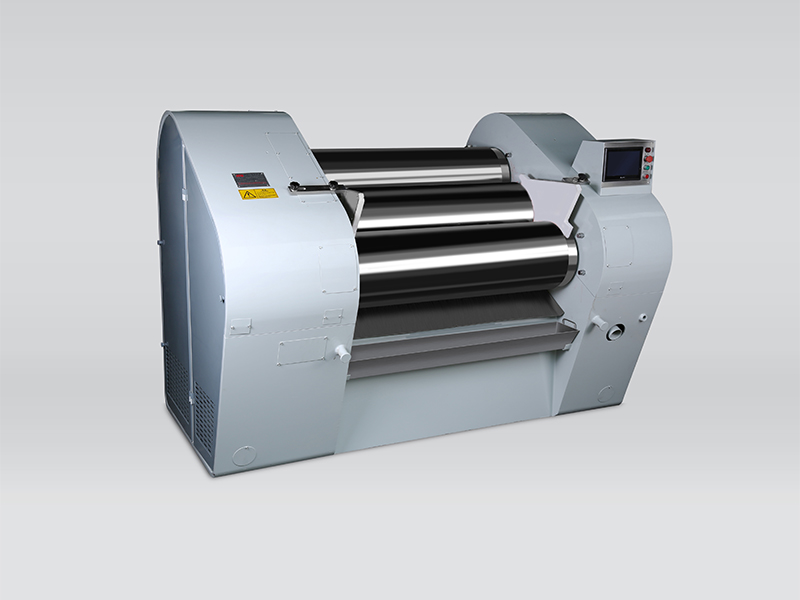
You control particle size in a 3 roller grinder through the gap between the rollers. This gap defines the maximum size of any particle that can pass through. Adjusting it gives you precise command over the fineness of the grind. Modern three roller mills achieve the following levels of gap precision:
A roller gap setting of less than 1 micron.
Typical micron-level gap precision of ≤1μm.
Ability to reach fine particle sizes below 5μm.
Direct influence on the uniformity and consistency of particle size distribution.
Impact on final product quality in cosmetics, inks, and electronic pastes.
Zili's three roll mill offers several gap adjustment options to match your production needs. Mechanical hand wheel adjustment on steel rolls gives you 5 micron repeatability. Hydraulic systems with digital readout improve that to 2 micron repeatability. Servo-driven systems reach 1 micron step resolution with recipe recall.
"Most operators run three to five passes on a lab three roll mill – the first pass breaks large agglomerates, and each subsequent pass refines the distribution further. Checking with a grind gauge after each pass is how you know when to tighten the gap again."
You check particle size after each pass and adjust the gap accordingly. The result is a consistent, narrow distribution that meets your specification. This iterative process works well at lab scale.
Scaling up from lab to production requires additional attention. Larger rollers disperse heat differently. Batch homogeneity becomes more difficult to maintain at volume. Mechanical tolerances accumulate at a larger scale.
"What doesn’t automatically carry over, however, is throughput, thermal behavior, and batch-to-batch uniformity at volume. Literature on scaling-up from the pharma and process engineering realms is fairly united on the idea that translating a result from lab-scale to pilot-scale to full production is an engineering effort, not a linear extrapolation-since larger rollers disperse heat differently, batch homogeneity becomes more difficult to maintain at volume, and the accumulation of mechanical tolerances becomes a more significant factor at a larger scale."
You must account for these factors when you move from lab to production. Validating the gap settings and process parameters at each scale ensures you maintain the same product quality. Thermal management becomes critical at higher throughputs. You may need to adjust cooling water flow or gap settings to compensate for heat buildup.
Impact on Extraction and Yield
Particle size uniformity directly affects your extraction and yield. When every particle falls within a tight range, you get more usable product from each batch. Over-grinding creates fines that may not meet specification. Under-grinding leaves agglomerates that require additional passes. Both situations reduce yield. Uniform dispersion improves color strength in inks and conductivity in electronic pastes. You achieve the target properties with fewer passes. That saves energy and time. Tighter gap control means less waste and higher throughput.
In practice, you run the material through the mill and check the grind gauge. If the particle size is above target, you tighten the gap for the next pass. If it is below target, you adjust to coarser. This iterative process ensures you extract the full value from your raw materials. The direct link between gap precision and yield means investing in a mill with micron-level gap control pays off through higher usable output per batch. You reduce rework and scrap, which lowers your overall manufacturing cost. Consistent particle size also improves downstream process stability, whether you are filling tubes, printing circuits, or applying coatings. The result is a more efficient operation from start to finish.
Lifecycle Operating Costs
Capital vs. Operational Costs
A 3 roller grinder costs more upfront than most traditional mills. You pay for precision engineering, harder roller materials, and tighter gap controls. A hammer mill or ball mill has a lower purchase price. That lower price often drives the initial buying decision.
The picture changes when you track costs over the life of the machine. Operational costs include energy, wear parts, labor, and downtime. These costs accumulate every production day. A mill that saves energy and needs fewer replacement parts can recover its higher purchase price over time. You must calculate the total cost of ownership, not just the invoice price.
Energy and Consumable Costs
Energy is the largest ongoing expense for any grinding operation. A roller mill uses 8–12 kWh per ton of material. A hammer mill uses 10–16 kWh per ton. That 15–25% gap translates into real savings on every ton you process. A vertical roller mill cuts energy use by 30–50% compared to a ball mill at the same capacity and fineness.
Consumable costs add another layer. Traditional mills rely on grinding media like steel balls or beads. You replace that media regularly as it wears down. A three roll mill uses no grinding media. The rollers wear slowly because they contact material through a controlled gap. Zili's centrifugally cast dual-metal alloy rollers reach a surface hardness of HS 70-75. That hardness extends roller life and reduces replacement frequency.
You also save on labor. Precise gap control reduces the number of passes needed to reach your target fineness. Fewer passes mean less operator time and lower energy use per batch. When you add energy savings, longer wear part life, and reduced labor together, the operational cost advantage of a three roll mill becomes clear. The higher upfront investment pays back through lower costs month after month.
Maintenance and Downtime Comparison
Wear Part Lifespan
Wear parts determine how often you stop production to replace components. A traditional mill depends on grinding media like steel balls or beads. That media wears down through constant impact and attrition. You must replace it on a regular schedule. Each replacement means downtime, labor, and material cost.
A 3 roller grinder uses no grinding media at all. The rollers contact material through a controlled gap. This design removes the largest consumable expense from your operation. Zili's centrifugally cast dual-metal alloy rollers reach a surface hardness of HS 70-75. That hardness extends roller life and pushes replacement intervals much further out. You also have the option of zirconia or alumina ceramic rollers for metal-free environments. Those ceramic rollers resist wear in abrasive formulations. The result is fewer shutdowns and more production hours per year.
Service and Labor Needs
Labor demands differ sharply between the two designs. A hammer mill or ball mill requires routine media handling, screen inspection, and frequent parts swaps. Each task pulls your operator away from production. A three roll mill simplifies the service routine. You inspect the rollers, check the gap setting, and verify the scraper knife. These tasks take minutes, not hours.
Precise gap control also reduces the number of passes needed to reach target fineness. Fewer passes mean less operator time per batch. You spend less effort monitoring the grind and adjusting settings. When you add longer wear part life to lower labor demand, the maintenance advantage becomes clear. Your team focuses on output instead of repairs. That shift lowers your cost per ton and keeps your schedule predictable.
Technical Strengths and Limitations
Capacity and Scalability
You find three roll mills at every production scale, from lab benchtop to full industrial lines. Zili offers specific models for each stage. The ES50 lab mill uses 50 mm rollers and reaches fineness down to 1–20 μm. It suits R&D and small-batch testing. The ES80 pilot mill adds water cooling for pilot-scale production. The ES120 small production model handles cosmetics, ink, and pigment paste. The DYS series uses chain drive and heavy-duty cast construction for large-scale paint lines. The YS and YSP series add PLC automation and servo gap control. These hydraulic models deliver roughly three times the output of conventional designs.
A 3 roller grinder handles materials from 10,000 to 2,000,000 mPas. That range covers most high-viscosity pastes. Bead mills clog above 100,000 mPas. Ball mills cannot process thick pastes. You get a clear advantage for sticky formulations. The trade-off is batch operation. Throughput falls below continuous bead mills for low-viscosity materials. But you clean a three roll mill in 5–15 minutes. Ball mills need 30–60 minutes. That quick changeover keeps you running more shifts.
Scaling from lab to production requires careful validation. Larger rollers disperse heat differently. Mechanical tolerances accumulate at volume. Zili's designs account for these factors through precision engineering across all model sizes.
Material Compatibility
You choose roller material based on your product's chemistry. Hardened steel rolls provide strong wear resistance. Alloy steel keeps costs low for most industrial jobs. Zili offers centrifugally cast dual-metal alloy rollers with surface hardness up to HS 70-75. These handle abrasive formulations with long service life.
For metal-free environments, you select zirconia or alumina ceramic rollers. These prevent metal contamination for pharmaceuticals, electronic pastes, and sensitive cosmetics. Ceramic rollers also maintain steady temperature with the dynamic cooling system. Full-length internal water circulation protects temperature-sensitive materials.
The dynamic cooling system handles heat buildup at high throughput. You process materials up to 1,000,000 cPs without thermal degradation. The open-roller design allows outgassing for reactive formulations. Micron-level gap precision down to 1–5 μm ensures you hit your target particle size. This combination of roller material options, cooling, and gap control makes the three roll mill suitable for inks, electronic pastes, cosmetics, pharmaceuticals, and advanced materials.
Industry Applications and Suitability
Not every mill fits every job. You need to match the grinding technology to your material and production goals. Three roll mills serve industries that demand high precision. Traditional mills handle applications with wider particle size tolerance.
Three Roll Mill in Inks and Electronics
You find three roll mills in industries that require fine particle dispersion. Inks and electronic pastes are primary examples. For conductive pastes, the 3 roller grinder gives you a clear advantage. The feed roll spreads the material evenly. The center roll generates shear force that breaks agglomerated particles. The apron roll applies the highest shear for final dispersion. You achieve gap precision down to 1 µm. This precision matters for consistent conductivity in silver paste, tungsten slurry, or carbon nanotube dispersions.
The numbers show the improvement. Tungsten slurry drops from 20 µm to 7 µm after processing. That is a 65% reduction in particle size. You cannot achieve this control with traditional milling methods. Conductive pastes require uniform dispersion for reliable electrical properties. The three roll mill delivers that uniformity.
You also handle high-viscosity materials above 100,000 cP. Bead mills clog at that thickness. The three roll mill processes these pastes without issue. Ceramic rollers prevent metal contamination in sensitive electronic formulations. Dynamic cooling keeps the temperature below 50°C. This protects organic carriers and binders from thermal damage.
Traditional Mills in Feed and Biomass
Traditional mills serve industries where cost matters more than micron-level precision. Feed production and biomass processing are two such sectors. Hammer mills handle dry, brittle materials efficiently. The common applications include:
Grinding grains like corn, wheat, and sorghum into mash for livestock and poultry feed.
Reducing protein meals for pet food production.
Processing wood chips, sawdust, and agricultural residues into consistent sizes for pelletizing.
Preparing feedstock for biofuel and ethanol processes.
These tasks do not require the tight gap control of a three roll mill. A hammer mill produces a wider particle size distribution. That distribution meets feed digestibility and biomass combustion needs. The lower equipment cost makes sense for these applications.
You choose the mill based on your product's viscosity and fineness requirements. High-viscosity pastes with tight specs go to the three roll mill. Dry, brittle materials with wider tolerances go to hammer mills. Matching technology to application saves you money and improves your output quality.
Selecting the Right Mill for Your Operation
Scale Considerations
Your production scale shapes the mill choice more than any other factor. A lab needs small batches and quick changeovers. A full production line needs throughput and uptime. Zili builds three roll mills for every stage. The ES50 lab mill uses 50 mm rollers for R&D. The ES80 pilot mill adds water cooling. The ES120 handles small production runs. The DYS and YSP series serve large-scale paint and ink lines. You match the model to your batch size and daily output target.
Traditional mills scale differently. A hammer mill runs continuously at high speed. That speed suits dry, brittle feedstocks. A three roll mill runs in batch mode. You clean it in 5–15 minutes. A ball mill needs 30–60 minutes. Quick changeover matters when you run multiple formulations per shift. Choose the mill that fits your workflow, not just your material.
Metrics-Based Selection
You need hard numbers to justify the purchase. Compare the two technologies across five operational metrics.
Operational Metric | Roller Mill (Three Roller) | Hammer Mill (Traditional) |
|---|---|---|
Particle Consistency | High — up to 90% uniform particle size | Moderate — wider size distribution |
Friction Heat | Low — preserves nutrients (vitamins, proteins) | High — can degrade proteins and scorch flour |
Energy Consumption | 30–38 kWh per ton processed | Significantly higher overhead |
Dust Generation | Minimal — ATEX-friendly, lower explosion risk | High — requires heavy dust extraction |
Moisture Tolerance | Excellent — screenless shearing avoids clogging | Poor — screens blind and clog with wet/oily grain |
Evaluate long-term running costs, not just the purchase price. Hammer mills rely on internal hammers and bottom screens that take severe wear. Disc and roller mills experience intense friction. Grinding plates need resilient materials like tungsten carbide to avoid rapid wear. Comparative studies on dried yam processing showed disc mills produced finer particles but used far more energy. The hammer mill scored better on a general performance index. Run the same trial with your material. Measure energy draw, particle distribution, and wear part life. Then calculate total cost of ownership over three years.
The decision between a 3 roller grinder and a traditional mill comes down to your priorities. You gain superior energy efficiency, tighter particle size, and lower long-term maintenance with a three roll mill. You pay a higher upfront price. Traditional mills cost less initially and offer simpler operation.
Use the data in this article to calculate your total cost of ownership over three years. Include energy, wear parts, labor, and downtime. Request material trials with both technologies. Test your specific formulation on each machine. Measure the particle distribution, energy draw, and throughput. Let the numbers guide your decision.
Your future scaling needs matter too. A three roll mill grows with you from lab to production. Consider your next five years of production volume.
FAQ
How much energy can a three roll mill save compared to a hammer mill?
A three roll mill uses 8–12 kWh per ton. A hammer mill uses 10–16 kWh per ton. That gap equals 15–25% lower energy consumption. You save money on every ton you process.
What particle size can a three roll mill achieve?
You reach micron-level gap precision down to 1–5 μm. Mechanical hand wheel adjustment gives 5 micron repeatability. Hydraulic systems reach 2 microns. Servo-driven systems hit 1 micron step resolution. This control delivers a tight, uniform particle distribution.
Can a three roll mill handle high-viscosity materials?
Yes. Zili's three roll mill processes viscosities up to 1,000,000 cPs. Bead mills clog above 100,000 cPs. The open-roller design and dynamic cooling system let you grind thick pastes without thermal damage.
How long does maintenance take on a three roll mill?
You clean a three roll mill in 5–15 minutes. A ball mill needs 30–60 minutes. Zili's dual-metal alloy rollers reach HS 70-75 hardness. That extends roller life and reduces replacement frequency. Your team spends less time on repairs.
Which mill suits my production scale?
Zili builds three roll mills from lab to full production. The ES50 handles R&D. The ES80 adds water cooling for pilot runs. The DYS and YSP series serve large-scale lines. Match the model to your batch size and daily output target.


